2023/9/21
Share to:

The 2026 Shift in Disposable Chemical Resistant Coveralls
Market Intelligence: High-Barrier Protection Meets Material Science
The global market for disposable chemical resistant coveralls is witnessing an unprecedented surge, projected to reach a valuation of $1.96 billion by the end of 2026. This growth is fueled by a critical intersection of stricter occupational safety regulations and a rapid expansion in high-tech pharmaceutical and unconventional energy exploration.
As industries move toward 2030, the "one-size-fits-all" approach to chemical protection is being replaced by application-specific engineering. Procurement officers are no longer just looking for a barrier; they are seeking a balance of Type-rated protection, thermal comfort, and supply chain transparency.
Strategic Procurement: The Case for Disposable Chemical Resistant Bulk Orders
For the oil and gas, petrochemical, and emergency response sectors, the move toward disposable chemical resistant bulk procurement has become a standard risk-mitigation strategy. The shift is driven by three primary factors:
Standardization of Protection: By utilizing disposable chemical resistant wholesale contracts, large enterprises ensure that every worker across multiple sites is equipped with the same certified level of protection—typically Type 5 (particulate) or Type 6 (liquid splash).
Elimination of Decontamination Logistics: Unlike reusable suits, disposable coveralls eliminate the hidden costs and failure risks associated with industrial laundering. Once a suit is contaminated, it is disposed of according to hazmat protocols, ensuring zero cross-contamination.
Cost Efficiency: Advances in polypropylene and microporous laminate production have lowered the average price per unit, making bulk acquisition significantly more viable than spot-buying during local industrial surges.
2026 Material Innovations: Breathability Without Compromise
The biggest technical challenge in the industry has historically been "heat stress"—the physiological strain caused by wearing non-breathable plastic barriers. In 2026, several breakthrough technologies have entered the wholesale market:
Microporous Laminated Fabrics: These materials feature billions of microscopic pores that are small enough to block liquid chemical molecules but large enough to allow moisture vapor (sweat) to escape.
Multilayer SMS (Spunbond-Meltblown-Spunbond): A staple in disposable chemical resistant bulk supplies, SMS provides a high-strength outer layer with a dense middle layer that filters out 99% of hazardous dust and fibers.
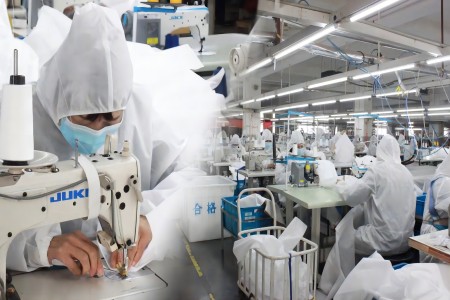
Taped and Welded Seams: To achieve Type 4 (spray-tight) or Type 3 (liquid-tight) ratings, manufacturers are now using automated ultrasonic welding, replacing traditional stitching to ensure that the seams are as resistant as the fabric itself.
Global Standards and Compliance
The 2026 landscape is governed by a "Standardization First" philosophy. Buyers are increasingly auditing suppliers for:
EN 14126: Protection against biological agents and infective agents.
EN 1149-5: Anti-static properties, crucial for explosive environments in the oil and gas industry.
EN 1073-2: Protection against radioactive particulate contamination.
Conclusion: The Future of Industrial Safety
As we navigate the remainder of 2026, the disposable chemical resistant coverall industry will continue to pivot toward sustainable synthetics and integrated smart-sensors that can detect chemical breakthrough in real-time. For procurement professionals, the message is clear: securing a reliable wholesale partner who can provide certified, high-performance bulk supplies is the foundation of a resilient safety culture.
News Center
Industry News


 WhatsApp
Send us your message
You can send an email asking for the price and detailed information of this product. We will reply you as soon as we receive your email