2023/9/21
Share to:
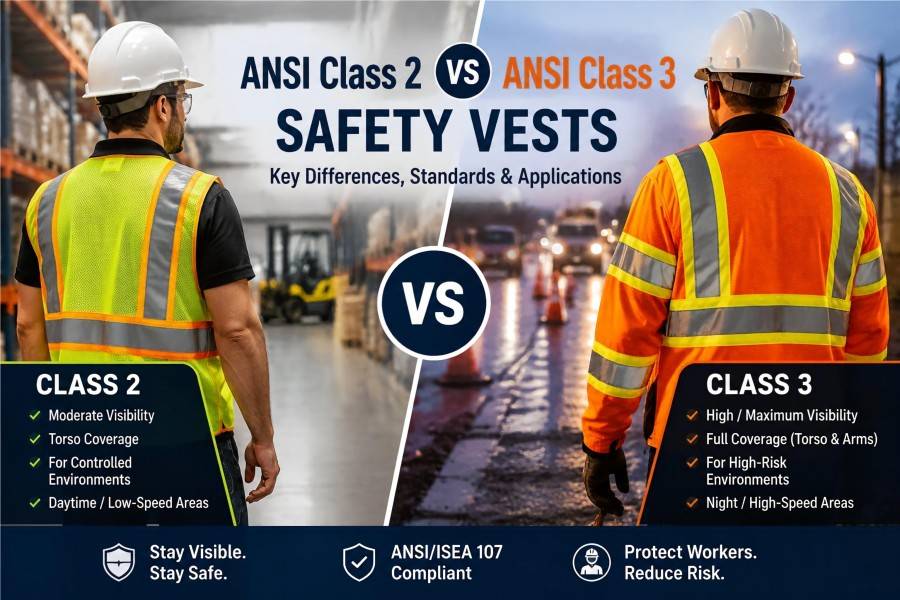
ANSI Class 2 vs Class 3 Safety Vests
Quick Summary
ANSI Class 2 and Class 3 safety vests are designed for different levels of visibility risk. Class 2 is suitable for moderate-risk environments, while Class 3 provides the highest visibility for high-risk roadside and low-light conditions.
1. Why ANSI Classification Matters
High visibility safety vests are not all the same. In industrial and construction environments, visibility level directly impacts worker safety, especially in areas with moving vehicles, heavy machinery, or low-light conditions.
The ANSI/ISEA 107 standard classifies high visibility apparel into different performance classes to ensure workers are visible under specific risk conditions.
2. What Is ANSI Class 2 Safety Vest?
ANSI Class 2 vests are designed for environments with moderate traffic or medium-risk visibility conditions. They provide a balance between comfort, breathability, and visibility.
Typical Features:
-
Fluorescent background material (yellow or orange)
-
Reflective strips covering torso area
-
Lightweight and breathable design
Common Applications:
-
Warehouse operations
-
Delivery and logistics
-
Parking attendants
-
Roadside work in low-speed zones
3. What Is ANSI Class 3 Safety Vest?
ANSI Class 3 vests provide the highest level of visibility protection. They are designed for high-risk environments where workers are exposed to fast-moving traffic or low-light conditions.
Typical Features:
-
Maximum fluorescent background coverage
-
Full-length reflective striping (arms, torso)
-
Long sleeve or extended coverage design
Common Applications:
-
Highway construction
-
Road maintenance at night
-
Emergency response teams
-
Railway and airport ground operations
4. Key Differences Between Class 2 and Class 3
| Feature | ANSI Class 2 | ANSI Class 3 |
|---|---|---|
| Visibility Level | Moderate | High / Maximum |
| Coverage Area | Torso only | Torso + arms |
| Work Environment | Controlled or low-speed areas | High-speed or high-risk zones |
| Comfort | Higher | Moderate |
| Typical Design | Mesh / sleeveless vest | Vest or long sleeve jacket |
5. How to Choose the Right Safety Vest
Selecting between Class 2 and Class 3 depends on the actual job site risk assessment.
-
Traffic speed and density
-
Lighting conditions (day, night, fog)
-
Worker proximity to vehicles or machinery
-
Regulatory requirements (OSHA / site rules)
In general, Class 2 is used for controlled environments, while Class 3 is required for high-risk roadside or low-visibility operations.
6. Industry Trends in High Visibility PPE
The demand for high visibility clothing continues to grow as global safety regulations become stricter. Many contractors now prefer multi-functional vests that combine breathability, storage pockets, and ANSI certification.
Mesh materials are also becoming more popular in warmer regions due to improved comfort without sacrificing visibility performance.
7. Conclusion
Understanding the difference between ANSI Class 2 and Class 3 safety vests is essential for selecting the right PPE for workplace safety. Proper classification ensures compliance, improves visibility, and reduces accident risk.
HXProtective supplies a full range of ANSI-compliant high visibility safety vests designed for construction, logistics, and industrial applications worldwide.
Related Articles
News Center
Industry News


 WhatsApp
Send us your message
You can send an email asking for the price and detailed information of this product. We will reply you as soon as we receive your email