2023/9/21
Share to:
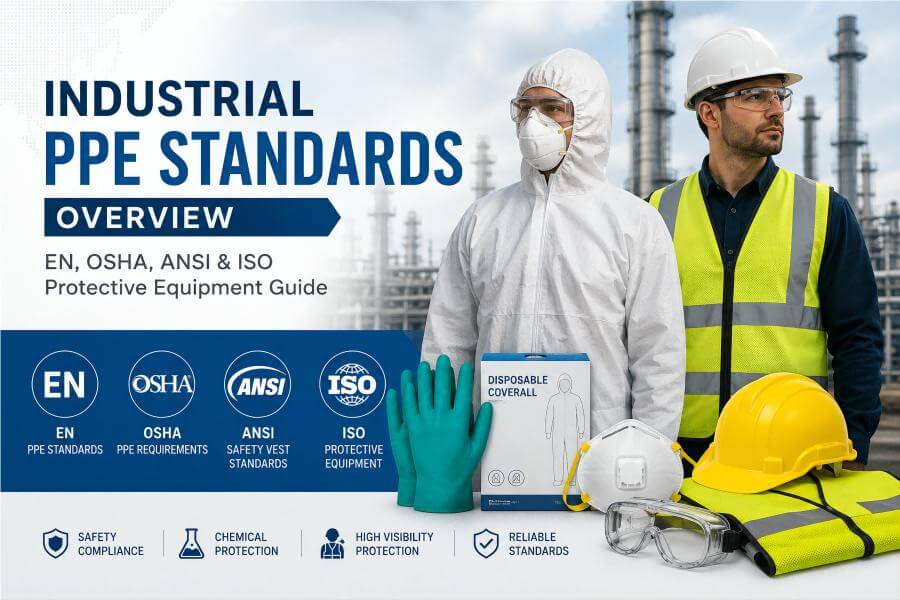
Industrial PPE Standards Overview
Industrial PPE standards are designed to ensure that protective equipment provides reliable safety performance in hazardous working environments. For manufacturers, importers, distributors, and industrial buyers, understanding these standards is essential when selecting disposable protective clothing, gloves, safety vests, and other industrial PPE products.
Different industries and regions follow different regulations, but the overall goal remains the same: protecting workers from physical, chemical, biological, and environmental hazards.
1. Why PPE Standards Matter
Industrial PPE is used in environments where workers may be exposed to chemicals, dust, liquid splashes, sharp materials, contamination risks, or low-visibility conditions. Without proper certification and testing, protective products may fail to provide the required safety performance.
International PPE standards help ensure:
-
Consistent product quality
-
Reliable protection performance
-
Compliance with workplace safety regulations
-
Safer working conditions for employees
-
Reduced operational and legal risks for businesses
2. Major Industrial PPE Standards
2.1 EN Standards (Europe)
EN standards are widely used throughout Europe and many international markets. These standards define testing methods, performance requirements, and protection levels for different PPE categories.
EN 13688 – General Protective Clothing Requirements
This standard covers general performance requirements for protective garments, including ergonomics, sizing, durability, and labeling.
EN 13982 – Protection Against Solid Particles
Applies to protective clothing designed to prevent penetration of hazardous dry particles, commonly associated with Type 5 coveralls.
EN 14605 – Protection Against Liquid Chemicals
This standard applies to protective clothing offering resistance against liquid chemical splashes and sprays, often linked to Type 3 and Type 4 protective coveralls.
EN 14126 – Protection Against Infective Agents
Used for protective clothing designed to protect against biological hazards and infectious agents.
2.2 OSHA Regulations (United States)
The Occupational Safety and Health Administration (OSHA) regulates workplace safety requirements in the United States.
OSHA does not certify PPE products directly but requires employers to provide appropriate protective equipment based on workplace hazard assessments.
OSHA PPE regulations commonly apply to:
-
Construction sites
-
Manufacturing facilities
-
Chemical plants
-
Warehouses
-
Food processing environments
2.3 ANSI Standards
ANSI standards are commonly associated with high-visibility safety clothing and industrial protective equipment in North America.
ANSI/ISEA 107 – High Visibility Safety Apparel
This standard classifies reflective safety garments into different protection levels depending on worker visibility requirements.
-
Class 1 – Low-risk environments
-
Class 2 – Moderate traffic or industrial exposure
-
Class 3 – High-risk roadway and heavy traffic environments
2.4 ISO Standards
ISO standards focus on manufacturing quality systems and international consistency.
Many PPE manufacturers operate under ISO-certified quality management systems to ensure stable production standards and traceability.
Common certifications include:
-
ISO 9001 – Quality Management Systems
-
ISO 13485 – Medical Device Quality Management
3. PPE Categories and Protection Levels
Industrial PPE products are typically classified based on risk level and intended application.
| PPE Category | Typical Protection | Common Applications |
|---|---|---|
| Type 5 | Hazardous dry particles | Dust control, asbestos removal |
| Type 6 | Limited liquid splash protection | General industrial maintenance |
| Chemical Protective Clothing | Liquid chemical resistance | Chemical plants, spraying |
| High Visibility Apparel | Worker visibility | Construction, road work |
4. How to Select PPE Based on Standards
Choosing PPE should always begin with workplace hazard evaluation.
Industrial buyers should consider:
-
Type of workplace hazard
-
Required compliance standards
-
Duration of exposure
-
Worker comfort and mobility
-
Environmental conditions
-
Industry-specific regulations
For example, food processing environments may prioritize hygiene and contamination control, while chemical industries require higher liquid and chemical resistance.
5. Common Mistakes When Purchasing Industrial PPE
-
Choosing PPE based only on price
-
Ignoring certification requirements
-
Using low-protection garments in hazardous environments
-
Overlooking worker comfort and heat stress
-
Purchasing non-compliant imported products
Improper PPE selection can increase safety risks, reduce productivity, and create compliance issues during workplace inspections.
6. Industry Trends in PPE Compliance
Global PPE standards continue to evolve as industries place greater emphasis on worker safety, contamination control, and sustainability.
Industrial buyers are increasingly looking for:
-
Certified disposable protective clothing
-
Breathable high-performance materials
-
Lightweight protective solutions
-
Traceable manufacturing systems
-
Compliance with international export regulations
As regulatory requirements become stricter, certified PPE products are becoming a standard purchasing requirement across global supply chains.
7. Conclusion
Understanding industrial PPE standards helps businesses select safer and more reliable protective equipment for different workplace environments. Whether for construction, chemical processing, food manufacturing, or industrial maintenance, certified PPE products play an essential role in workplace safety and regulatory compliance.
HXProtective supplies a full range of industrial disposable PPE products designed to meet international quality and safety standards for global industrial applications.
Related Articles
News Center
Industry News


 WhatsApp
Send us your message
You can send an email asking for the price and detailed information of this product. We will reply you as soon as we receive your email